The Scapegoat
The last day of a phase does not always look like completion. Sometimes it looks like a second reckoning.
The Kidney holds two things that cannot be separated: will and fear. The will named itself this morning. Now the fear speaks.
Leviticus 16. The Day of Atonement. Two goats — not one. The first is sacrificed. The second is brought alive before the assembly. The high priest lays both hands on its head and confesses over it all the iniquities of the people, all their transgressions, all their sins. Then the goat is sent into the wilderness. It carries what the community cannot carry for itself. It does not choose this. It is assigned. It leaves so the community can remain clean.
The Hebrew is azazel. The goat that departs. The one sent away.
The pattern is older than the ritual. It runs through families, through relationships, through systems that need someone to carry what they cannot acknowledge in themselves. The one who absorbs. The one who takes on the weight without being asked. The one whose departure makes the remaining structure legible again.
It is not chosen consciously. It is structural. Pre-language. The body learns it before the mind can name it.
The pilgrimage has been the work of naming it.
The FOR/WITH distinction — traced through every phase of this pilgrimage — is the scapegoat's grammar. Building FOR people rather than WITH them. Carrying FOR the community rather than standing WITH it. The scapegoat is FOR taken to its absolute limit: total weight, no reciprocity, departure into the wilderness.
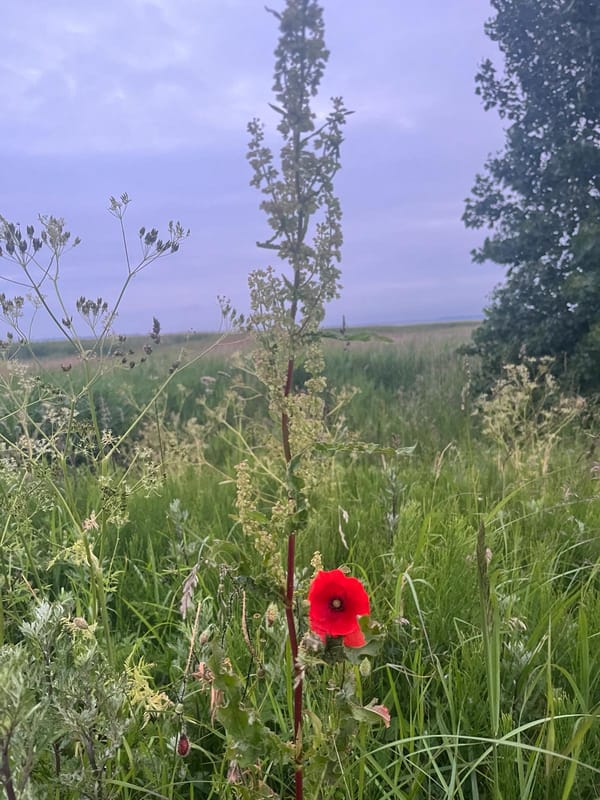
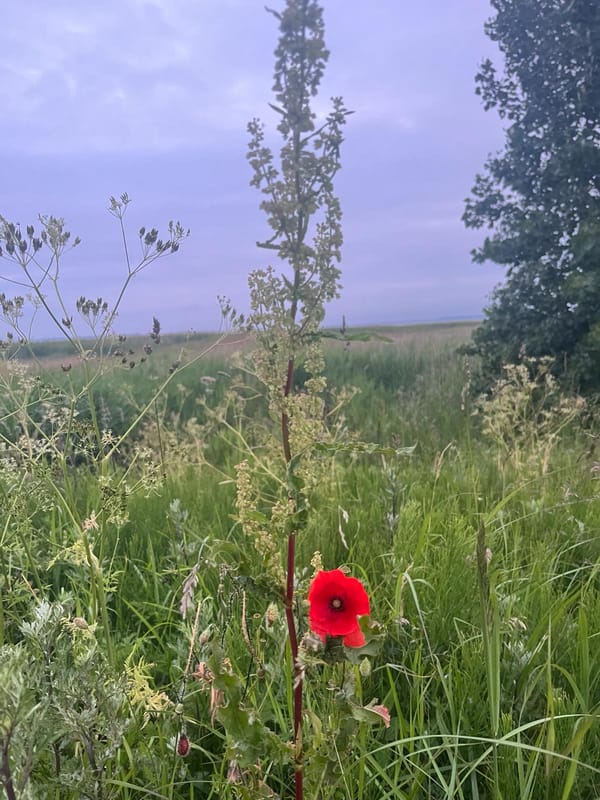
The wilderness is not punishment. It is the structural consequence of a role accepted too completely, too long.
In the constellation work — Days 29 to 32 — the pattern surfaced. The one who holds what the system cannot acknowledge. The one whose carrying allows others to remain light. The wound that cannot heal in the place where it occurred — because the place needs the wound to remain open in order to maintain its balance.
I may not heal in the same place where the wound occurred.
That sentence was written in March. It has taken until May to understand its full weight.
The scapegoat does not return in Leviticus. It is sent and it stays sent. The wilderness is its end.
But the pilgrimage is not Leviticus. The pilgrimage is the work of walking back out of the wilderness — not because the wilderness was wrong, but because it was never meant to be permanent. The goat that recognises the pattern is no longer only the goat. It becomes something else: the one who carried, who now sets the weight down, who walks back toward the community with empty hands and a different kind of presence.
Not FOR. Not carrying what belongs to others.
WITH. Present. Hands free.
The Agate — the stone of this phase — is the warrior's stone. Inner stability. Protection of what is essential. The warrior who has carried long enough to know what is his to carry and what was never his at all.
Joseph Campbell spent a lifetime mapping the hero's journey across every culture and mythology. One pattern, everywhere. The call. The crossing. The return. Campbell called it the road of trials — the belly of the whale, the wilderness between the world left behind and the world not yet reached. Every mythology has it. The hero is not sent into the wilderness as punishment. He is sent because the crossing is what makes the return possible. The hero who refuses to return stays in the wilderness permanently. The hero who returns brings something back — not for the community that sent him out, but from himself, genuinely his to give. Empty hands. A different kind of presence.
The Kidney releases both. The will that names the destination. And the fear — the ancestral pattern, the structural wound — that made the wilderness feel like home for so long.
The last day of the Kidney. Both surfaces.
Seven places were on the table. Now three. I am not naming them yet. What I am naming is what I need from wherever I land.
Day 56b — Phase 8 — The Scapegoat — Kidney — Agate — Durga
Gut Nisdorf, Mecklenburg-Vorpommern, Baltic Coast
© 2025–2026 Michel Garand | A Pilgrim's Fitness Plan | CC BY-SA 4.0
stewardship@ubec.network